Private vs. Public Gift Lists: What to Know Before Sharing a Wishlist Online
Before sharing a wishlist online, it helps to understand who can access it, what information guests actually need and how much personal detail is really necessary.

LinGift Team
Editorial team
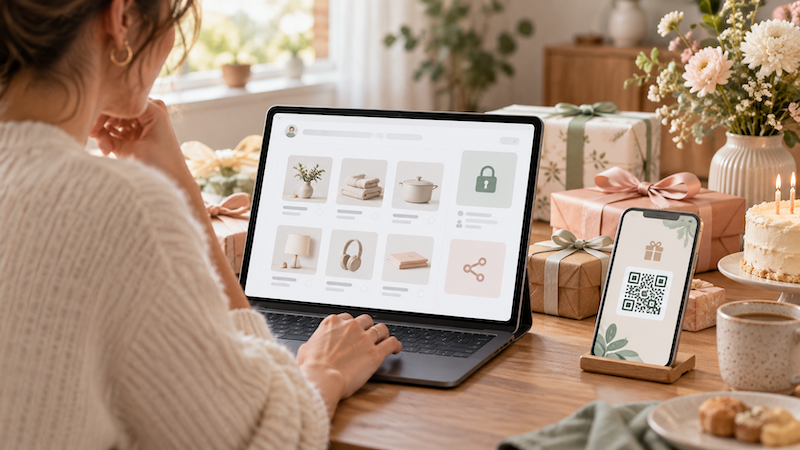
Creating an online gift list can make a celebration much easier.
Instead of answering the same questions repeatedly, you can share interests, preferences and gift ideas in one place.
But before sending the link, there is another question worth considering:
Who should be able to see the list?
Some wishlists are designed to be publicly discoverable.
Others are intended primarily for people who receive a direct link.
Neither approach is automatically right or wrong.
The better choice depends on why you're creating the list, who needs access and what information you're comfortable sharing.
Here's what to consider before publishing or sharing an online gift list.
What is a public gift list?
A public gift list is generally a wishlist that can be discovered or accessed more broadly.
Depending on the platform, that might mean people can find it through:
- Search features within the website.
- A public profile.
- Search engines.
- A username or name search.
- Publicly shared social profiles.
This can be useful in certain situations.
For example, someone creating a list for a public project, community initiative or creator audience may intentionally want it to be easy to find.
But a family birthday list has a very different purpose.
If the goal is simply to help invited guests choose a gift, broad public discovery may not be necessary.
The first question should therefore be:
Does this list need to be discoverable, or does it only need to be easy to share?
Those are not the same thing.
What is a private or shared-link gift list?
A more limited approach is to share a wishlist directly with the people who need it.
That might happen through:
- A private message.
- WhatsApp.
- Email.
- A digital invitation.
- A QR code.
This can work especially well for birthdays, baby showers and family celebrations.
The list does not need to be something strangers are expected to discover.
Guests simply receive the link from the organizer.
There is an important distinction, however:
A shared link is not necessarily the same as a password-protected private page.
If someone forwards the link, another person may also be able to open it.
That's why it's still important to think carefully about the information you include.
Guests usually need less personal information than you think
The purpose of a gift list is to help someone choose.
That usually requires information about preferences, not private details about someone's life.
Useful information might include:
- Interests.
- Favorite colors.
- Clothing sizes.
- Hobbies.
- Types of books they enjoy.
- Gift ideas.
- Things they would prefer to avoid.
That is enough to answer many of the questions a guest actually has.
For example:
Interests: drawing, science and adventure books.
is useful.
But a gift list generally does not need to include:
the child's school, daily routine or other unrelated personal information.
A simple rule can help:
If the information doesn't help someone choose a gift or understand the celebration, ask whether it needs to be there at all.
Keep celebration details and gift information separate when possible
An invitation and a wishlist often serve different purposes.
The invitation may need information such as:
- Date.
- Time.
- Venue.
- RSVP instructions.
The gift list may need:
- Preferences.
- Sizes.
- Interests.
- Gift ideas.
Keeping those purposes clear can reduce unnecessary sharing.
For example, the wishlist itself usually doesn't need to display a home address simply because the birthday takes place there.
The guest already received the location through the invitation.
This is especially worth considering when creating lists for children.
Should guests need an account to view a wishlist?
This is another useful question when comparing online gift list platforms.
Requiring every guest to create an account may provide certain platform features, but it can also add friction.
Imagine receiving an invitation and then having to:
create an account → verify an email → sign in → find the event
just to see a few gift preferences.
For some celebrations, that may be more effort than guests expect.
When evaluating a platform, consider:
- Can guests easily open the list?
- Is the sharing process clear?
- Do they understand what information they're seeing?
- Can they access the important features without unnecessary steps?
A good gift-list experience should work for the organizer and for the guest.
What about gift reservations?
Privacy isn't only about who can see the wishlist.
It's also about what information each person can see inside it.
Gift reservations are a good example.
Guests may need to know that an idea has already been selected so they can avoid buying the same gift.
But the person celebrating doesn't necessarily need to know:
- Who reserved it.
- What they are going to receive.
- Which gifts have already been chosen.
The ideal experience balances two goals:
Help guests coordinate.
Preserve the surprise.
If duplicate gifts are something you're trying to prevent, our guide How to Avoid Duplicate Birthday Gifts Without Spoiling the Surprise looks at this problem in more detail.
Public doesn't automatically mean bad, and private doesn't automatically mean safe
It is tempting to think of the decision as:
Public = bad
Private = good
But that is too simple.
A publicly shared list containing only general gift ideas may reveal very little personal information.
A supposedly private list could contain far too much personal detail.
What matters is both:
who can access it
and
what you've chosen to share.
That is why reviewing the information before publishing is just as important as choosing the platform.
A simple checklist before sharing your wishlist
Before sending the link, ask:
- Is this information actually useful to guests?
- Have I included anything unnecessarily personal?
- Are sizes and preferences current?
- Are things to avoid explained clearly?
- Can guests understand whether specific products are suggestions or requirements?
- Can they access the list easily?
- Is there a way to reduce duplicate gifts?
- Am I comfortable with the information if the link is forwarded?
If the answer to the last question is no, reconsider what information is included.
A gift list should provide guidance, not unnecessary exposure
A useful wishlist does not need to tell the internet everything about the person celebrating.
It only needs to give the right people enough information to make a better decision.
That usually means focusing on:
interests instead of personal history
preferences instead of private details
useful context instead of unnecessary information
gift ideas instead of pressure
If you're still deciding what information belongs in a wishlist, Why Some Gift Lists Still Leave Guests Guessing explains why product links alone may not be enough.
How LinGift approaches event sharing
LinGift is designed around celebrations and the information guests need to choose more confidently.
An organizer can create an event and add details such as:
- Interests and preferences.
- Sizes.
- Things to avoid.
- Specific gift ideas.
Once the event is ready, it can be shared through a direct link or QR code with the people invited to the celebration.
The organizer decides what information to include in the event.
This makes it possible to provide useful gift guidance without turning the wishlist into a public profile containing unnecessary personal details.
If you'd like to see the process from beginning to end, How to Create an Event in LinGift: Step-by-Step Guide explains how to create, configure and share an event.
The goal is simple:
Give guests the information they need to choose better, without sharing more than they need to know.
Frequently Asked Questions
Should a gift wishlist be public or private?
It depends on its purpose. A family celebration may only need a link shared directly with invited guests, while other types of lists may benefit from public discovery.
Is a wishlist shared by link completely private?
Not necessarily. A link can potentially be forwarded, so avoid including information you would not be comfortable having seen by someone outside the original guest list.
What personal information should I put on a wishlist?
Usually only information that genuinely helps with gift selection, such as interests, preferences, sizes and things to avoid.
Should I include my home address on a gift list?
In most cases, the wishlist itself does not need it. Event-location details can often be shared separately through the invitation.
Do guests need an account to use an online gift list?
That depends on the platform. When choosing a service, consider how much friction account creation adds for guests and whether it is necessary for the features they need.
Can a private wishlist still help prevent duplicate gifts?
Yes. A platform can provide coordination features such as gift reservations while still limiting unnecessary personal information.