What to Put on a Birthday Wish List for Kids: Ideas by Age, Interests and Budget
Not sure what to put on a child's birthday wish list? Discover practical gift ideas by age, interests and budget, plus tips for sizes, preferences, experiences and things to avoid.

LinGift Team
Editorial team
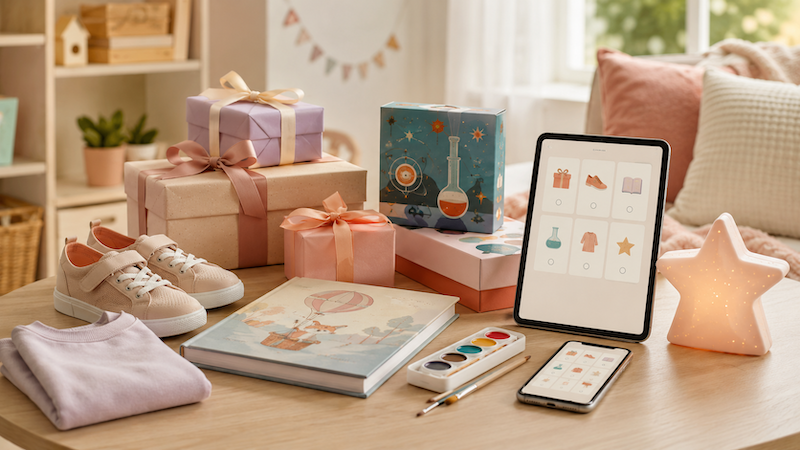
Creating a birthday wish list for a child can make gift giving easier for family and friends, but knowing what to include is not always simple.
Should the list contain specific products or just general ideas? How many gifts should you add? Should you include clothing sizes? What about things the child does not like? And how can you give guests useful guidance without making the list feel like a shopping order?
A helpful birthday wish list should do more than collect toys. It should give guests enough information to understand the child’s current interests, preferences, needs and personality, while still leaving them free to choose a thoughtful gift.
In this guide, we’ll look at what to put on a kids’ birthday wish list, with practical ideas by age, interest and budget.
What should you put on a child's birthday wish list?
A useful kids’ birthday wish list can include:
- Current hobbies and interests
- Favorite colors, characters or styles
- Specific gift ideas
- General gift categories
- Books and educational activities
- Creative or hobby-related supplies
- Clothing and shoe sizes
- Sports or outdoor items
- Experiences
- Ideas at different price points
- Things the child already owns
- Things they would prefer not to receive
You do not need to include every category. The goal is to provide enough variety to help guests choose without overwhelming them.
A good list answers one simple question:
What information would help someone choose a gift this child is genuinely likely to enjoy or use?
1. Start with the child, not the gift
Before searching for products, think about the child as they are right now.
Children's interests can change quickly. A toy or character they loved a year ago may no longer interest them, while a new hobby could suddenly become very important.
Consider questions such as:
- What do they enjoy doing after school?
- What activities hold their attention?
- What books or stories do they enjoy?
- Do they like creating, building, moving, exploring or solving problems?
- Have they recently started a new hobby?
- Is there something they have been asking to learn?
- What do they frequently use at home?
- Is there something useful they currently need?
Age provides useful context, but it should not be the only factor.
Two children who are both 10 years old may have completely different wish lists. One might enjoy drawing and reading fantasy books, while another prefers basketball, video games and outdoor activities.
For toys in particular, it is also important to pay attention to the manufacturer's age recommendations and whether the product matches the child's abilities and interests. The U.S. Consumer Product Safety Commission recommends following age guidance and other safety information on toy packaging.
2. Combine specific gifts with general preferences
One of the easiest mistakes to make is filling a wish list entirely with specific products.
Specific gift ideas are useful, but preferences give guests more flexibility.
Imagine a child who enjoys art.
You could add:
Specific gift idea:
A watercolor painting set.
But you could also add:
Preference:
She enjoys drawing, watercolor painting, coloring and creative projects. Washable, non-toxic art materials are preferred.
Now a guest has options.
They can purchase the watercolor set, but they could also choose a sketchbook, colored pencils, an art organizer or another suitable creative gift.
A balanced wish list can contain three kinds of information:
Specific gifts
Products the child would particularly enjoy.
Gift categories
Broader ideas such as books, art supplies or sports equipment.
Personal preferences
Colors, interests, styles, sizes and other details that help guide the decision.
Combining all three makes the list much more useful.
3. Include different types of gifts
Children do not necessarily need a wish list filled entirely with toys.
A more balanced list can include several kinds of gifts.
Something they really want
This is the easiest category.
It might be:
- A particular toy
- A favorite book series
- A building set
- A board game
- A craft kit
- A room accessory
Including a few highly desired items makes the list exciting for the child.
Something useful
Practical gifts can still be enjoyable when they match the child's personality.
Examples include:
- Backpack
- Water bottle
- Sports bag
- Clothing
- Pajamas
- Sneakers
- Art organizer
- Desk accessories
- Lunch box
Add relevant information such as sizes, colors or styles.
Something creative
Creative gifts can support hobbies the child already enjoys or introduce a new activity.
Ideas include:
- Drawing supplies
- Painting kits
- Bracelet-making sets
- Modeling materials
- Sewing or craft kits
- Photography accessories
- Building sets
Something to read
Books are easy to personalize according to age and interests.
Instead of simply writing “books,” provide more information:
Adventure, fantasy and mystery books for readers ages 9–12. She especially enjoys stories with exploration, friendship and brave characters.
That description gives guests significantly more direction.
Something active
For children who enjoy movement or sports, consider:
- Basketball
- Soccer ball
- Jump rope
- Scooter accessories
- Sports equipment
- Outdoor games
- Bicycle accessories
For riding toys and similar products, appropriate safety equipment should also be considered. CPSC specifically recommends helmets and other safety gear for scooters and riding toys.
Something to experience
Not every gift needs to be an object.
Depending on the child and where they live, experiences could include:
- Movie tickets
- Museum admission
- Zoo tickets
- Art class
- Sports lesson
- Cooking class
- Trampoline park visit
- Theater performance
- Family activity
- Contribution toward a special outing
Experiences can be especially useful when the child already owns many toys or when the family prefers to avoid adding more physical items at home.
4. Birthday wish list ideas by age
Age can help narrow the options, but these categories should be treated as starting points rather than strict rules.
The child's individual interests and abilities should always come first.
Ages 1–3
Consider simple gifts that encourage exploration and are appropriate for young children.
Ideas:
- Board books
- Large building blocks
- Shape sorters
- Push-and-pull toys
- Simple musical toys
- Bath toys
- Age-appropriate puzzles
- Clothing
- Outdoor play items
For children under three, small parts are an important safety consideration. CPSC advises keeping toys with small parts and small balls away from children younger than three.
Ages 4–6
Children in this age group often enjoy imaginative and hands-on activities.
Ideas:
- Pretend-play sets
- Dress-up accessories
- Building sets
- Art supplies
- Beginner board games
- Picture books
- Early-reader books
- Puzzles
- Outdoor toys
- Simple science activities
Try to match the gift to the child's actual interests instead of assuming every child enjoys the same type of play.
Ages 7–9
This age range offers many opportunities to connect gifts with growing hobbies.
Ideas:
- Craft kits
- STEM activities
- Chapter books
- Graphic novels
- Construction sets
- Board games
- Sports equipment
- Puzzles
- Outdoor activities
- Room decorations
- Beginner hobby equipment
At this age, preferences become particularly helpful because children may already have strong opinions about colors, topics, hobbies and styles.
Ages 10–12
Older children may appreciate gifts that give them more independence or allow them to develop a particular interest.
Ideas:
- Art and craft kits
- Science projects
- Strategy games
- Books and graphic novels
- Sports equipment
- Creative technology
- Room accessories
- Journals
- Building or engineering kits
- Hobby supplies
- Music accessories
- Experiences
Instead of choosing something simply because it is marketed for a 10- or 12-year-old, consider what that particular child actually enjoys.
Teens
Teen wish lists usually become even more personalized.
Possible ideas include:
- Fashion accessories
- Books
- Technology accessories
- Sports equipment
- Gaming accessories
- Music-related gifts
- Hobby supplies
- Room decor
- Experiences
- Gift cards
- Contributions toward a larger purchase
For teens, brands, styles, models and compatibility can matter more, so specific information becomes especially useful.
5. Choose gift ideas based on interests
Interests are often a better starting point than age alone.
Here are some examples:
| If they enjoy... | Gift ideas could include... |
|---|---|
| Art | Drawing sets, watercolor supplies, sketchbooks, craft kits |
| Science | STEM kits, experiments, beginner microscopes, science books |
| Reading | Books, graphic novels, bookmarks, reading accessories |
| Sports | Equipment, clothing, training accessories, tickets |
| Music | Headphones, beginner instruments, music accessories |
| Building | Construction sets, engineering kits, puzzles |
| Nature | Gardening kits, binoculars, nature books, outdoor activities |
| Games | Board games, puzzles, strategy games |
| Cooking | Kids' cooking tools, recipe books, baking activities |
| Fashion | Accessories, bags, clothing or jewelry |
| Animals | Books, craft kits, animal experiences or themed accessories |
You can also combine interests.
A child who likes animals + art, for example, might enjoy an animal watercolor kit.
A child interested in science + building might prefer an engineering or robotics activity.
These combinations can lead to more personal gift ideas.
6. Include options for different budgets
A birthday wish list should make guests feel comfortable, not pressured.
Avoid creating a list where every item is expensive.
Instead, offer several price levels.
For example:
Under $15
- Books
- Small craft kits
- Coloring supplies
- Card games
- Puzzles
- Accessories
$15–$30
- Board games
- Art kits
- Building sets
- Sports accessories
- Room decorations
$30–$50
- Larger STEM kits
- Hobby equipment
- Premium building sets
- Sports gear
- Larger creative kits
$50+
- Special gifts
- Electronics
- Larger sports equipment
- Experiences
- Items several relatives could purchase together
These are only examples. Appropriate price ranges will vary between families, countries and groups of guests.
The important principle is:
A useful wishlist should offer choices, not set expectations.
Guests should be able to find an idea that feels comfortable within their own budget.
7. Add the practical details guests actually need
Sometimes the most valuable information on a birthday wish list is not a gift at all.
It is context.
For example:
Clothing
Instead of:
Clothes
Try:
Clothing size 10–12. She prefers comfortable casual clothing in purple, pink, turquoise or pastel colors.
Shoes
Instead of:
Sneakers
Try:
Shoe size 35. Comfortable casual or athletic shoes are preferred.
Books
Instead of:
Books
Try:
Adventure, fantasy and mystery books for readers ages 9–12. Please avoid horror stories.
Art supplies
Instead of:
Art supplies
Try:
She enjoys watercolor painting, drawing and crafts. Washable and non-toxic materials are preferred.
Small details like these significantly improve the chances of choosing something appropriate.
8. Mention things the child already owns
Duplicate gifts do not only happen when two guests purchase the same present.
Sometimes a guest unknowingly buys something the child already owns.
Useful information might include:
- Board games already at home
- Books already read
- Building sets already owned
- Sports equipment already available
- Devices and their models
- Collections that are already complete
You do not need to create an inventory of everything the child owns.
Only mention items where duplication is reasonably likely.
For example:
She already has several large stuffed animals, so smaller creative or educational gifts would be more useful.
That single sentence can prevent several unsuitable purchases.
9. Include a short “please avoid” section
A preference list should explain what the child enjoys, but a short list of things to avoid can also be very helpful.
Possible examples include:
- Toys designed for much younger children
- Very loud electronic toys
- Horror themes
- Certain characters
- Strong fragrances
- Specific materials
- Foods containing allergens
- Products the child already owns
- Clothing styles they do not wear
Keep this section short and positive.
Instead of:
Don't buy dolls, noisy toys, scary games or dark clothes.
Consider:
She prefers creative activities, books and games appropriate for her age. Please avoid baby dolls, very loud toys and horror-themed products.
The information is the same, but the tone feels much more welcoming.
10. How many gifts should be on a birthday wish list?
There is no perfect number.
For many birthday celebrations, around 8 to 15 varied ideas can provide enough choice without creating an overwhelming catalog.
However, the quality and variety of the list matter more than the exact number.
A list of 10 ideas could include:
- 2 creative gifts
- 2 books or educational ideas
- 2 games
- 1 practical gift
- 1 outdoor gift
- 1 room accessory
- 1 experience
That creates significantly more variety than 10 nearly identical toys.
For a small celebration with only a few guests, a shorter list may be enough. For a larger celebration, more ideas and broader preferences may be useful.
11. Consider gifts that are not products
A wish list does not have to be limited to things that can be placed inside a gift box.
You can also include:
Experiences
Museum, theater, sports or family activities.
Classes
Art, music, cooking, sports or another activity the child wants to explore.
Memberships
A museum, zoo, activity center or similar local attraction.
Contributions
For a larger bicycle, instrument, computer or another special purchase.
Handmade gifts
For some children, something personalized or handmade can be more meaningful than a purchased product.
Including these options makes the list more flexible and can be especially helpful for children who already have many physical belongings.
12. What should you NOT put on a kids' birthday wish list?
A good list helps guests decide. Certain choices can make that harder.
Too many similar gifts
Ten versions of nearly the same toy do not create meaningful variety.
Only expensive products
This can unintentionally make guests uncomfortable.
Extremely vague ideas
“Anything she likes” does not provide useful guidance.
Products the child does not actually know or want
The purpose of the list is not to fill it because an item happens to be popular.
Incorrect sizes or outdated preferences
Children grow and their interests change. Review the information before sharing it.
An endless list
The wishlist should feel curated rather than like an online shopping catalog.
Most importantly:
Avoid turning a birthday wish list into a purchase order.
Guests should still have the freedom to choose something different.
13. Check age recommendations and safety information
When adding toys or children's products, do not focus exclusively on whether the gift looks fun.
Check:
- Recommended age
- Safety warnings
- Small-parts warnings
- Required protective equipment
- Whether adult supervision is recommended
- Whether the product matches the child's abilities
CPSC recommends following the age guidance and safety information provided on toy packaging and selecting toys that match the child's interests and abilities.
This is particularly important when siblings of different ages live in the same household, since toys appropriate for an older child may contain small components that are unsafe for younger children.
14. Example: A birthday wish list for a 10-year-old girl
Here is what a practical list might look like.
Meet Sofía
Sofía is turning 10. She is creative, curious and enjoys drawing, crafts, books, games and simple science activities.
Interests
- Drawing and watercolor painting
- Crafts
- Adventure, fantasy and mystery stories
- Board games
- Puzzles
- Science activities
Favorite colors
- Purple
- Pink
- Turquoise
- Pastel colors
Here is what a practical list might look like.
Meet Sofía
Sofía is turning 10. She is creative, curious and enjoys drawing, crafts, books, games and simple science activities.
Interests
- Drawing and watercolor painting
- Crafts
- Adventure, fantasy and mystery stories
- Board games
- Puzzles
- Science activities
Favorite colors
- Purple
- Pink
- Turquoise
- Pastel colors
Gift ideas
Friendship bracelet kit
A creative activity she can enjoy while making accessories for herself, friends and family.
Children's science kit
A hands-on way to explore experiments and satisfy her curiosity about how things work.
Art supply case
Useful for drawing, coloring and trying different creative projects.
Adventure or fantasy book
A great option because she enjoys imaginative stories and reading independently.
Family board game
Something she can enjoy with friends and family rather than using alone.
Soft night light
A decorative option for her room that matches her preference for pastel colors.
Useful details
Clothing: Size 10–12
Shoes: Size 35
Please avoid
Baby dolls, toys with very loud or repetitive sounds, and horror-themed products.
Notice that Sofía's list does not tell guests exactly what they must purchase.
Instead, it gives them enough information to understand who she is and what she currently enjoys.
That is what makes the wishlist useful.
15. How LinGift can help organize these preferences
You could place all of this information inside an invitation, but the result would quickly become difficult to read.
A better approach is to keep the invitation focused on the celebration and place the additional gift information somewhere guests can access when they need it.
With LinGift, you can create a birthday event and organize:
- Interests and preferences
- Favorite colors and styles
- Clothing and shoe sizes
- Things to avoid
- Specific gift ideas
- Descriptions explaining why an idea is suitable
- Different types of gifts
You can then share the event with guests through one link or QR code.
This gives guests guidance without requiring the invitation itself to contain a long list of products and preferences.
Birthday wish list checklist
Before sharing a child's birthday wish list, check that it includes:
☐ Current interests and hobbies
☐ Several different gift categories
☐ Ideas at different price points
☐ Correct clothing or shoe sizes when relevant
☐ Favorite colors or styles
☐ A few specific gift suggestions
☐ Enough general preferences to allow other choices
☐ Things the child already owns when duplication is likely
☐ Important things to avoid
☐ Age-appropriate gift suggestions
☐ Updated links if you include products
☐ A friendly message explaining that the list is optional
Frequently Asked Questions
What should I put on a child's birthday wish list?
Include a combination of specific gift ideas, current interests, favorite colors or styles, useful sizes, general gift categories and several price options. You can also mention important things the child already owns or would prefer not to receive.
How many items should be on a birthday wish list?
There is no required number, but around 8 to 15 varied ideas can work well for many birthday celebrations. Smaller celebrations may need fewer. Variety is more important than quantity.
Is it okay to include expensive gifts on a birthday wishlist?
Yes, as long as they are balanced with affordable options. A higher-priced item can also be presented as a possible group gift rather than an expectation for a single guest.
Should a birthday wishlist include clothing sizes?
If clothing, shoes or accessories are appropriate gifts, including current sizes can save guests from guessing and reduce exchanges.
Should I include things my child does not like?
Yes, when the information is genuinely useful. Keep the section short and polite, focusing on preferences that can prevent an unsuitable or duplicate gift.
Is a birthday wish list rude?
A wish list does not need to be a demand. When presented as optional guidance, it can help guests who would otherwise need to ask what the child likes or needs. The wording matters: make it clear that gifts are optional and that guests are free to choose.
Can guests choose something that is not on the list?
Absolutely. Preferences and interests can help guests find their own gift ideas. A good wishlist provides guidance rather than limiting choices.
Can a birthday wish list include experiences?
Yes. Tickets, classes, family activities, memberships or contributions toward a larger experience can all be useful alternatives to physical gifts.
Make the list helpful, not restrictive
The best birthday wish lists do not simply answer “What should I buy?”
They answer a more useful question:
“What would this child genuinely enjoy?”
By sharing current interests, practical information, several gift categories and different price options, you can make gift selection easier while preserving the thought and surprise behind choosing a present.
And when all of that information is organized in one place, guests can spend less time guessing and more time choosing something meaningful.
Create your free LinGift account, organize preferences and gift ideas for the next birthday, and share everything through one simple link or QR code.