Non-Toy Birthday Gifts for Kids: Experiences, Activities and Practical Ideas
Looking for a birthday gift that isn't another toy? Explore experiences, activities, books, hobby supplies, memberships and practical gifts kids can actually enjoy and use.

LinGift Team
Editorial team
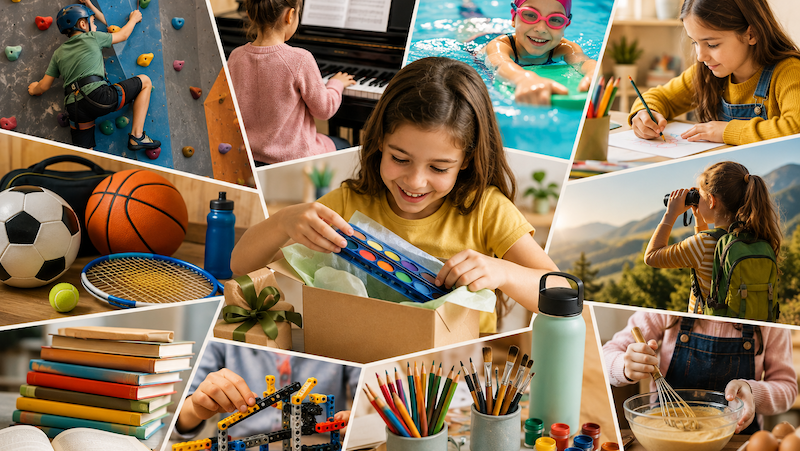
Birthday gifts do not have to mean adding another toy to the playroom.
For some children, a new toy is exactly what they want. But there are also many situations where a different kind of gift may be more useful, memorable or connected to something they genuinely enjoy.
Maybe the child already has plenty of toys.
Maybe their interests are becoming more specific.
Maybe they spend most of their free time drawing, reading, playing sports, cooking, exploring nature or learning music.
Or perhaps the family simply prefers gifts that create experiences rather than more things to store at home.
In those situations, it can help to think beyond the traditional toy aisle.
A non-toy birthday gift might be:
- An experience.
- A class.
- A book.
- Materials for an existing hobby.
- Sports equipment.
- A membership.
- Something useful.
- Something consumable.
- A contribution toward a larger goal.
The goal is not to avoid toys simply for the sake of avoiding them.
It is to ask a better question:
What could this child genuinely enjoy, use, learn from or remember?
Why consider a non-toy birthday gift?
There are several good reasons to consider something different.
The child already has many toys
Sometimes another toy simply becomes one more object competing for attention.
A child who already has shelves full of toys may appreciate something that gives them a new experience instead.
You want to support an existing interest
If a child spends hours drawing, giving them better art materials may be more meaningful than introducing an unrelated toy.
You want the gift to last beyond the birthday
A class, membership or hobby-related gift may continue providing value for weeks or months.
Space is limited
Families living in smaller homes may appreciate gifts that do not require additional storage.
The child is getting older
As children grow, their interests often become more specific.
A 10- or 12-year-old may be more excited about a basketball accessory, book series, art workshop or concert than another traditional toy.
You want to create a memory
Experiences can become part of the child's memories instead of another item in a closet.
None of these reasons makes toys bad gifts.
It simply means the best gift category depends on the child.
1. Experience gifts
Experiences can be particularly meaningful because the gift is something the child gets to do.
Depending on their interests and where they live, consider:
- Movie tickets.
- Children's theater.
- Sporting event tickets.
- Zoo admission.
- Aquarium tickets.
- Science museum.
- Children's museum.
- Amusement park.
- Trampoline park.
- Indoor climbing.
- Mini golf.
- Bowling.
- Family attraction.
- Special day trip.
When choosing an experience, think about more than whether the activity sounds exciting.
Ask:
- Is it easy for the family to reach?
- Does it require an adult ticket too?
- Is there an expiration date?
- Can the family choose their own date?
- Is the activity appropriate for the child's age?
- Will transportation or scheduling make the gift difficult to use?
A great experience gift should create enjoyment, not another obligation for the parents.
2. Classes and lessons
A class can be a wonderful gift when it supports something the child already wants to explore.
Possible options include:
- Art classes.
- Painting workshops.
- Pottery.
- Dance lessons.
- Music lessons.
- Swimming lessons.
- Sports clinics.
- Martial arts.
- Cooking classes.
- Baking workshops.
- Coding classes.
- Robotics.
- Photography.
- Theater.
- Language activities.
The important distinction is interest versus expectation.
A child who constantly draws may love an art workshop.
A child who has never expressed any interest in violin probably should not receive violin lessons simply because an adult thinks learning music would be good for them.
Whenever possible, support curiosity that is already there.
3. Books and reading gifts
Books are one of the simplest non-toy alternatives, but choosing them thoughtfully matters.
Instead of asking:
“What book is popular for this age?”
consider:
“What does this child enjoy reading about?”
Possible categories include:
- Adventure.
- Fantasy.
- Mystery.
- Humor.
- Animals.
- Science.
- Space.
- Sports.
- History.
- Graphic novels.
- Activity books.
- Biographies for young readers.
You can also turn reading into a more complete gift.
For example:
Book + reading light
Book + personalized bookmark
Book series + small storage basket
Bookstore gift card + notebook
Knowing what the child already owns is especially useful because books can easily become duplicate gifts.
4. Hobby supplies
One of the strongest non-toy gift strategies is to help a child go further with something they already enjoy.
Think of the hobby first and the product second.
For a child who loves drawing
Consider:
- Better-quality pencils.
- Sketchbooks.
- Watercolor paper.
- Brushes.
- Markers.
- Art organizer.
For someone interested in photography
Consider:
- Photo album.
- Simple tripod.
- Printing credits.
- Storage accessories.
- Photography activity book.
For a child who loves crafts
Consider:
- Additional materials.
- Storage containers.
- Specialty paper.
- Yarn.
- Beads.
- Tools appropriate for their age.
For a young musician
Consider:
- Instrument accessories.
- Music stand.
- Sheet music.
- Protective case.
- Lesson credit.
The idea is simple:
Instead of giving them another activity, help them go deeper into one they already enjoy.
5. Art and creative supplies
Creative supplies deserve their own category because many of them are gradually used and replaced.
That makes them very different from another permanent object.
Ideas include:
- Sketchbooks.
- Watercolor sets.
- Paint.
- Canvases.
- Colored pencils.
- Markers.
- Modeling materials.
- Origami paper.
- Craft paper.
- Brushes.
- Clay.
- Scrapbooking materials.
For younger children, consider washable and age-appropriate materials.
For older children who already enjoy creating, quality may matter more than quantity.
A smaller set of useful materials can be more valuable than a huge kit containing dozens of items they will never use.
6. Sports-related gifts
For an active child, sports equipment can be both practical and exciting.
Examples include:
- Basketball.
- Soccer ball.
- Volleyball.
- Training cones.
- Sports bag.
- Water bottle.
- Protective equipment.
- Practice accessories.
- Team merchandise.
- Tickets to a sporting event.
- Contribution toward sports lessons.
However, sports gifts can become highly specific.
Before buying expensive equipment, confirm:
- What sport they actually play.
- Their size.
- Whether they already own the item.
- Whether their team or program requires specific equipment.
A basketball for someone who plays every week can be a great gift.
A random piece of equipment for a sport they have never tried is much less likely to be useful.
7. Memberships
A membership can turn one birthday gift into several future experiences.
Depending on what is available locally, possibilities include:
- Zoo membership.
- Museum membership.
- Science center membership.
- Children's museum.
- Botanical garden.
- Aquarium.
- Recreation center.
- Art center.
- Family attraction.
Memberships work especially well when the family already visits that place.
Before buying one, check:
- Who is included.
- Whether adults need separate admission.
- How long it lasts.
- Whether the location is convenient.
- Whether the family already has a membership.
A membership becomes much more valuable when it fits naturally into the family's routine.
8. Practical gifts kids can actually enjoy
“Practical” does not have to mean boring.
The key is choosing something the child will actually use and making it relevant to their personality.
Ideas can include:
- Backpack.
- Lunch bag.
- Reusable water bottle.
- Sports bag.
- Reading lamp.
- Desk organizer.
- Art supply organizer.
- Bedding.
- Room storage.
- Pajamas.
- Rain gear.
- Travel accessories.
Preferences matter significantly here.
A backpack in a favorite color may be exciting.
A random backpack they do not like may simply become something the parents have to exchange.
When buying practical gifts, try to know:
- Size.
- Favorite colors.
- Style.
- What they currently need.
9. Room and personal-space gifts
As children grow, having some control over their personal space can become meaningful.
Possible gifts include:
- Small decorative lamp.
- Reading light.
- Wall organizer.
- Desk accessories.
- Storage boxes.
- Photo display.
- Bedding.
- Small rug.
- Bulletin board.
- Book organizer.
- Alarm clock.
Avoid permanent decoration or very specific designs unless you know the child's preferences well.
The goal is to help them personalize their space, not redesign their room for them.
10. Cooking and baking gifts
For children who already enjoy helping in the kitchen, cooking-related gifts can combine creativity with practical skills.
Ideas include:
- Child-friendly utensils.
- Apron.
- Baking tools.
- Recipe book.
- Cookie decorating materials.
- Cake decorating kit.
- Cooking class.
- Baking workshop.
- Ingredients for a special recipe.
Age and supervision matter.
The activity should be appropriate for the child's abilities and family environment.
A cooking gift is much more useful when the child already shows interest in preparing food.
11. Nature and outdoor experiences
For children who enjoy exploring outside, consider gifts that encourage observation rather than simply adding another toy.
Examples:
- Binoculars.
- Nature journal.
- Gardening tools.
- Seeds or plant-growing kit.
- Bird-watching activity.
- Magnifying tools.
- Outdoor exploration guide.
- Camping accessory.
- Family nature experience.
- Park or nature-center membership.
A simple combination could be:
Nature journal + binoculars
or
Gardening tools + seeds
These gifts can turn curiosity into an activity that lasts beyond the birthday.
12. Something consumable
Some of the most practical gifts are designed to be used up.
That can be especially useful for families trying to reduce clutter.
Examples include:
- Art materials.
- Craft supplies.
- Baking ingredients.
- Sticker collections.
- Journals.
- Notebooks.
- Specialty paper.
- Modeling clay.
- Sidewalk chalk.
- Photography printing credits.
Consumable gifts work particularly well when they support an existing hobby.
The important idea is:
The gift provides an activity without becoming permanent clutter.
13. A contribution toward something bigger
Sometimes the child wants something that is beyond the budget of one guest.
For example:
- Bicycle.
- Musical instrument.
- Computer.
- Sports equipment.
- Camera.
- Special class.
- Summer activity.
- Family trip or experience.
Several relatives may prefer contributing toward one meaningful goal instead of purchasing many smaller gifts.
This type of gift usually works best when the family has already communicated the goal.
Avoid creating a contribution fund for something the child has never asked for simply because adults think it would be useful.
14. Gift cards—with some intention behind them
Gift cards are technically not experiences or products on their own, but they can be a useful non-toy option.
They work best when connected to something the child enjoys.
Examples:
- Bookstore.
- Art store.
- Sports store.
- Movie theater.
- Local attraction.
- Restaurant they enjoy.
- Clothing store for an older child.
- Activity center.
You can make the gift feel more personal by explaining the idea behind it.
For example:
“We know you love reading, so we thought you might enjoy choosing your next adventure.”
The child gets freedom while still understanding why the gift was chosen.
15. Gifts that create time together
Sometimes the gift can be less about an item and more about a shared plan.
For close family members, this could be:
- Baking together.
- A movie outing.
- A museum day.
- A picnic.
- A sports game.
- An art afternoon.
- A trip to a favorite restaurant.
- A hiking day.
- A special activity with grandparents.
This type of gift works particularly well when the relationship itself is meaningful.
For example, a grandparent might give:
“A day at the science museum with Grandpa.”
The experience becomes both the gift and the time spent together.
Non-toy gift ideas by age
Interests should matter more than age, but age can still help narrow the options.
Ages 4–6
Consider:
- Picture books.
- Art supplies.
- Children's museum visit.
- Simple cooking activity.
- Swimming lesson.
- Outdoor exploration.
- Beginner music class.
- Zoo visit.
Ages 7–9
Consider:
- Chapter books.
- Art workshop.
- Sports equipment.
- Science museum.
- Craft supplies.
- Cooking class.
- Nature exploration.
- Family game experience.
- Membership to a local attraction.
Ages 10–12
Consider:
- Hobby supplies.
- Sports lessons.
- Books or graphic novels.
- Photography activity.
- Art or coding workshop.
- Room accessories.
- Concert or event tickets.
- Cooking experience.
- Contributions toward a larger hobby item.
Teens
Consider:
- Experiences with friends.
- Concerts or sporting events.
- Hobby equipment.
- Classes.
- Books.
- Technology accessories when appropriate.
- Gift cards tied to interests.
- Room or desk improvements.
- Contributions toward a larger goal.
Again, these are starting points.
Knowing what the child actually enjoys is more useful than simply knowing their age.
What are good non-toy gifts for kids who already have everything?
When a child already owns many things, start by looking at what they actually use.
Instead of finding another category, consider one of these approaches.
Upgrade something they love
Better art supplies.
Better sports equipment.
The next level of a hobby.
Replace something they have outgrown
A backpack.
Sports gear.
Books.
Practical equipment.
Give access instead of ownership
Museum membership.
Class.
Workshop.
Experience.
Give supplies for something they already do
Materials get used.
Another large object may not.
Contribute toward a bigger goal
Help them move toward something meaningful rather than adding several small items.
This can be a much more thoughtful strategy than trying to discover a toy they somehow do not already have.
How to know whether an experience gift is a good idea
Before buying an experience, ask five practical questions:
1. Does the child actually enjoy this type of activity?
Do not choose an experience only because it looks impressive.
2. Is it easy for the family to use?
Location and transportation matter.
3. Can they choose the date?
Flexibility can make the gift much easier to use.
4. Are there extra costs?
Parents should not discover that your gift requires additional tickets, equipment or fees.
5. Does it expire?
A short expiration period can turn a gift into a deadline.
A good experience should feel like an opportunity rather than an obligation.
What should you consider before giving a practical gift?
Practical gifts are most successful when you know enough about the child.
Before buying, check:
- Size.
- Favorite colors.
- Preferred styles.
- Existing items.
- Current needs.
- Whether the child would actually use it.
For example:
“She needs a new backpack.”
is useful.
But even better is:
“She needs a medium school backpack and loves purple, turquoise and pastel colors.”
A little context can make a practical item feel much more personal.
Don't replace every toy with an “educational” gift
There is another mistake worth avoiding.
A non-toy gift does not need to become an assignment.
Children should be allowed to receive gifts simply because they are enjoyable.
A class, book, museum membership or science activity can be wonderful when it connects with something the child likes.
But turning every birthday gift into:
- Homework.
- Skill development.
- Academic preparation.
- Something adults think the child “should” enjoy.
can miss the point.
A useful rule is:
Support curiosity instead of prescribing it.
How to politely suggest non-toy gifts for your child's birthday
If you are organizing the celebration and prefer experiences or practical gifts, try to communicate the idea as guidance rather than a requirement.
For example:
Maya already has plenty of toys, so if you're looking for ideas, she currently loves books, art activities and trips to the science museum. Gifts are completely optional—your presence is what matters most to us.
Or:
For anyone who has asked, Leo is currently very interested in basketball, reading and outdoor activities. Experiences and hobby-related gifts are also great options.
This gives guests direction without making them feel that they must follow a specific rule.
A practical example
Imagine Sofia is turning 10.
She already has plenty of toys.
Her current interests are:
- Art.
- Reading.
- Science.
- Crafts.
- Spending time with friends.
Instead of adding another set of traditional toys to her wishlist, her family could consider:
Experience
An art workshop.
Reading
A fantasy book or bookstore gift card.
Hobby supplies
Better watercolor paper and brushes.
Science
Admission to a science museum.
Practical
A new organizer for her art materials.
Shared activity
A craft afternoon with a family member.
These gifts are very different from each other, but they all share something important:
They connect with things Sofia already enjoys.
That is much more useful than choosing something simply because it is categorized as a “gift for 10-year-olds.”
A simple non-toy gift checklist
Before choosing, ask:
- ☐ Does this connect with something the child enjoys?
- ☐ Is it appropriate for their age?
- ☐ Will they realistically use it?
- ☐ Is it practical for the family?
- ☐ Does it require additional purchases?
- ☐ Does an experience have a reasonable expiration date?
- ☐ Do I know enough about sizes or preferences?
- ☐ Does the child already own something similar?
- ☐ Is this something they want, rather than something adults want for them?
You do not need every answer to be perfect.
The checklist simply helps you move from “What can I buy?” to “What would make sense for this child?”
Frequently Asked Questions
What are good non-toy birthday gifts for kids?
Experiences, books, classes, sports equipment, hobby supplies, memberships, art materials, practical items and contributions toward larger goals can all be good alternatives when they match the child's interests.
Are experiences good birthday gifts for children?
Yes, particularly when the activity is something the child already enjoys and is convenient for the family. Check location, scheduling, expiration dates and additional costs before buying.
What can I give a child who has too many toys?
Consider experiences, consumable art or craft supplies, hobby materials, books, memberships, classes or a contribution toward something larger.
Are practical gifts okay for children's birthdays?
Yes. Practical gifts can be meaningful when they reflect the child's style, needs or interests. Knowing the correct size, color and preferences makes a big difference.
Are gift cards good non-toy gifts?
They can be, especially when connected to a specific interest such as books, art, sports or movies. They also give older children more control over their final choice.
What are good non-toy gifts for a 10-year-old?
Consider hobby supplies, books, art workshops, sports lessons, science experiences, room accessories, cooking classes, museum visits or contributions toward something related to an existing interest.
Should I ask parents before giving an experience?
For experiences requiring transportation, scheduling, additional tickets or ongoing commitments, checking with the parent first is usually helpful.
How can I ask guests for non-toy gifts without sounding demanding?
Present them as optional suggestions. Share the child's current interests and mention that experiences, books or hobby-related gifts are welcome ideas rather than requirements.
A meaningful gift doesn't have to be another thing
There is nothing wrong with giving a child a toy they genuinely want.
But a birthday gift can also be:
Something they experience.
Something they learn.
Something they create.
Something they use.
Something connected to a hobby they love.
Or simply time spent with someone important to them.
The best choice depends on the child.
Instead of asking:
“What can I buy instead of a toy?”
try asking:
“What would this child genuinely enjoy doing, using or experiencing?”
That question opens up many more possibilities.
Share more than products with LinGift
A birthday wishlist does not have to be limited to boxes and toys.
With LinGift, you can organize the person's interests, preferences and gift ideas around the celebration and give guests more context about what they currently enjoy.
That can include inspiration for:
- Books.
- Experiences.
- Hobby supplies.
- Practical items.
- Activities.
- Specific gift ideas.
Then share the celebration through a simple link or QR code.
Guests can use the ideas directly or use the preferences to find their own thoughtful alternative.
The goal is not to create a longer shopping list.
It's to help people choose gifts that make sense for the person receiving them.
Create your free LinGift account and organize the ideas for your next celebration.