How to Politely Share a Birthday Wishlist With Family and Friends
Sharing a birthday wishlist doesn't have to feel awkward. Learn how to present it as optional guidance, with practical wording for invitations, WhatsApp, family members and children's birthday parties.

LinGift Team
Editorial team
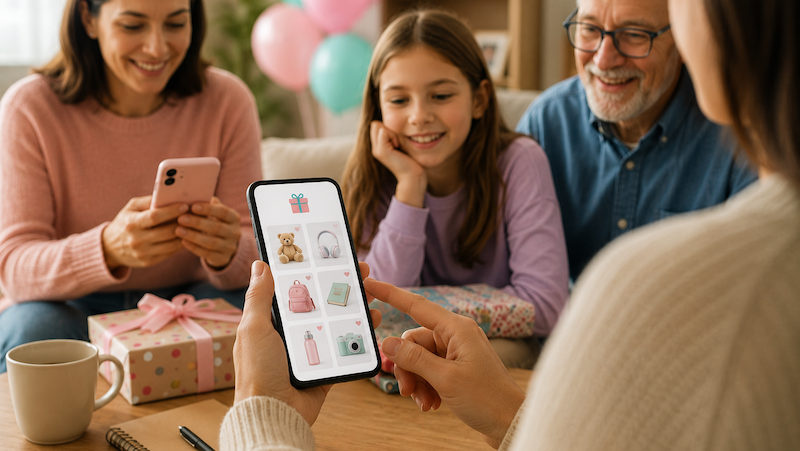
You've created a birthday wishlist.
It includes a few useful ideas, current interests, maybe some sizes and even things the birthday person would prefer not to receive.
Now comes the part that can feel surprisingly uncomfortable:
How do you actually send it to people?
Many parents and organizers worry that sharing a wishlist might sound demanding, make gifts feel mandatory or take away the personal side of choosing a present.
But a birthday wishlist does not have to communicate:
“Please buy something from this list.”
It can simply communicate:
“If you were already thinking about a gift and would like some guidance, here is some information that may help.”
That distinction makes a big difference.
This guide explains how to share a birthday wishlist politely, when to send it and how to adapt your message for family, friends, grandparents, WhatsApp, invitations and children's birthday parties.
Is it rude to share a birthday wishlist?
Not necessarily.
A wishlist can actually be helpful for guests who would otherwise have to guess what the birthday person likes or contact the family individually for ideas.
The key is how you present it.
There is a significant difference between:
Here is the list of things you need to buy.
and:
We put together a few current interests and gift ideas in case they're helpful.
The first creates an expectation.
The second provides information.
A polite birthday wishlist should feel like optional guidance, not an order.
Cultural expectations and family traditions can also vary, so consider your audience. In some families, sharing lists is completely normal. In others, relatives may be more accustomed to asking for ideas directly.
You do not need everyone to use the list in exactly the same way.
The four parts of a polite wishlist message
You can make almost any wishlist message sound more natural by including four simple elements.
1. Start with the celebration
The birthday should come before the gifts.
For example:
We're excited to celebrate Sofia's 10th birthday with everyone.
This immediately establishes what really matters.
2. Explain why you're sharing the list
Give the wishlist a purpose.
For example:
A few people have asked what she's interested in right now...
or:
We put together some of her current interests and gift ideas in case anyone would find them helpful.
3. Make it optional
This is perhaps the most important part.
Use language such as:
Feel free to use it for inspiration.
or:
There's absolutely no need to choose something from the list.
4. End without putting the focus on gifts
For example:
We're simply looking forward to celebrating together.
This brings the message back to the event.
Put together, the structure becomes:
Celebration → reason → optional guidance → no-pressure close
That simple framework can work in almost any situation.
1. How to share a birthday wishlist on WhatsApp or by text
WhatsApp and text messages are particularly useful because the wishlist link can be opened directly from the conversation.
Keep the message relatively short.
Warm and simple version
We're excited to celebrate Sofia's birthday! 🎉 A few people have asked for gift ideas, so we put together a short wishlist with some of her current interests and things she enjoys. Feel free to use it simply as inspiration. We're most excited to celebrate with everyone! 💜
[Wishlist link]
More casual version
Here's Sofia's birthday wishlist in case it's helpful 😊 We added a few things she currently likes and some gift ideas. There's absolutely no need to choose something from the list—it's just there for inspiration.
[Wishlist link]
Very short version
For anyone who asked for gift ideas, here's a small wishlist with some of Sofia's current interests 😊 Feel free to use it as inspiration!
[Wishlist link]
Notice that none of these messages say:
Please buy one of these.
The list is presented as a resource.
2. How to include a wishlist with a birthday invitation
If the wishlist is already prepared when you send the invitation, you can include it without making it the main part of the design.
The invitation should still prioritize:
- Who is celebrating.
- Date.
- Time.
- Location.
- RSVP information.
- Relevant party instructions.
The wishlist can appear as secondary information.
For example:
Gift ideas, if helpful:
We've put together a few current interests and birthday ideas for anyone who would like some inspiration. Gifts are completely optional.
[Wishlist link or QR code]
Or:
Looking for gift ideas?
We've shared a few things Noah currently enjoys here:
[Wishlist link]
This approach works especially well with digital invitations.
If you use a QR code in a visual invitation, also consider sending the clickable link in the accompanying WhatsApp or text message. It may be easier for guests who are already viewing the invitation on their phone.
3. How to share a wishlist for a child's birthday party
Children's birthdays create a particular challenge because many of the invited families may not know the birthday child very well.
Parents of classmates might know:
- The child's name.
- Approximate age.
- Their own child's relationship with them.
But not necessarily:
- Current interests.
- Clothing size.
- Books already owned.
- Favorite activities.
- Things they do not like.
In this situation, a wishlist can be genuinely useful.
A parent-friendly message could say:
We're looking forward to celebrating Daniel's birthday with the kids! For anyone who would like a little help with gift ideas, we've created a short list with some of his current interests and preferences. Please feel free to use it simply as a guide—gifts are completely optional.
[Wishlist link]
This communicates useful information without turning the invitation into a request for presents.
4. How to share a wishlist with grandparents
Grandparents and close relatives may actually prefer more specific guidance.
They may already be planning to buy a gift and simply want to know:
“What would they really enjoy?”
With close family, the message can be more direct while still remaining flexible.
For example:
Mom, you asked what Sofia would like for her birthday, so I put some ideas together here. She has been really interested in art, crafts and science lately. There are a few specific suggestions, but you definitely don't have to choose one of them. The preferences should give you some other ideas too.
[Wishlist link]
This is less formal because the person already asked.
For grandparents, practical details can also be especially helpful:
- Clothing size.
- Shoe size.
- Current book interests.
- Hobbies.
- Things already owned.
They may want to choose something themselves, and those details allow them to do that with confidence.
5. How to respond when someone asks, “What does your child want?”
This is probably the easiest moment to share the wishlist.
Instead of sending several product screenshots or rewriting the same suggestions each time, you can respond:
Thanks for asking! We put together a little wishlist with some things Emma currently enjoys and a few ideas. You don't need to pick something from it, but it might help with inspiration 😊
[Wishlist link]
Or simply:
Yes! I actually made a little list because a few people have asked. It includes some of his interests and gift ideas:
[Wishlist link]
Because the guest requested the information, there is even less reason to feel uncomfortable sharing it.
6. How to share a wishlist in a family group chat
Family group chats can be useful, but they can also make a wishlist feel more like an announcement than guidance.
Add some context rather than simply dropping the link.
Instead of:
Sofia's list: [link]
try:
A few of you have been asking what Sofia is into these days, so we put together a little birthday list with her current interests and some ideas. Use it only if it's helpful—she'll be happy just having everyone there to celebrate 💜
[Wishlist link]
This explains why the list appeared in the conversation.
It also avoids repeatedly sending recommendations privately to different relatives.
7. How to share a wishlist with parents of school classmates
This audience often benefits most from concise communication.
You may not know the other parents personally, so avoid a long explanation.
For example:
Hi! We're looking forward to having Lucas join Emma's birthday celebration. For anyone who would like gift inspiration, we've shared a few of Emma's current interests and ideas here. Gifts are completely optional.
[Wishlist link]
Or:
We've included a small birthday wishlist for anyone who asked about gift ideas. It's simply a guide to some of the things Emma currently enjoys 😊
[Wishlist link]
Short, clear and low-pressure usually works best.
8. What if you don't want gifts to feel expected?
Be explicit.
There is nothing wrong with saying:
Gifts are completely optional.
Or:
No gift is necessary.
Or:
Your presence is what matters most to us.
However, avoid adding so many disclaimers that the message starts to feel uncomfortable.
For example:
You absolutely don't need to bring anything at all, really, please don't feel like you have to, but if you happen to want to...
is probably more awkward than simply saying:
Gifts are completely optional. For anyone who would like ideas, we've shared a short wishlist here.
Clear language is often the kindest language.
9. What if you genuinely prefer no gifts?
If you do not want gifts at all, a wishlist may not be necessary.
Simply communicate the preference clearly.
For example:
We're keeping the celebration simple and aren't expecting gifts. Having you there to celebrate with us is more than enough.
If relatives insist on asking, you could suggest an alternative such as:
- A handmade birthday card.
- A book donation.
- A shared experience.
- A contribution to a cause important to the family.
But if the invitation explicitly says no gifts, avoid sending a traditional wishlist at the same time. The two messages would contradict each other.
10. Should you include prices when sharing a wishlist?
You do not necessarily need to mention a budget in the message itself.
Instead, make sure the wishlist offers ideas at different price levels.
For example:
- Small books or craft supplies.
- Mid-range games.
- Hobby materials.
- Experiences.
- Larger group-gift ideas.
That allows guests to choose based on what feels comfortable for them.
A good wishlist should communicate:
“There are options.”
not:
“This is how much you're expected to spend.”
11. Don't send only expensive ideas
Even if your message is polite, a wishlist containing only expensive gifts may communicate pressure unintentionally.
Imagine receiving a list where everything costs $75 or more.
Even if the message says:
No pressure!
the actual options suggest otherwise.
Balance matters.
If you include higher-value ideas, also provide:
- Affordable alternatives.
- General preferences.
- Experiences at different price levels.
- Group-gift possibilities.
Thoughtfulness does not need to be expensive.
12. Share preferences, not only products
A wishlist feels much less demanding when guests can use it as inspiration rather than as a shopping checklist.
Instead of only listing:
- Product A.
- Product B.
- Product C.
include context such as:
Current interests
Art, science and adventure stories.
Favorite colors
Purple, turquoise and pastel colors.
Useful details
Clothing size 10–12.
Please avoid
Very loud toys.
Now an invited guest can choose something completely different and still feel confident about the decision.
If you need help deciding what kind of information belongs in a child's list, our guide on what to put on a birthday wish list for kids covers preferences, price ranges, interests and practical details in more depth.
13. Avoid overly specific instructions unless they're genuinely necessary
There are situations where exact information matters.
For example:
Shoe size 35.
or:
This accessory needs to be compatible with Nintendo Switch.
Those details can prevent a mistake.
But avoid turning every idea into:
Buy this exact color, from this exact store, in this exact version.
unless there is a legitimate reason.
A birthday wishlist generally works best when it leaves some room for personal choice.
If exact products are the main goal, you may actually be looking for something closer to a registry. Our guide on birthday wishlists vs. gift registries explains the difference.
14. Should you send the wishlist with the invitation or afterward?
Both approaches can work.
Send it with the invitation when:
- The list is already prepared.
- You expect many guests to ask for ideas.
- Most invitations are digital.
- You want everyone to receive the same information.
Keep it visually secondary to the actual celebration details.
Send it afterward when:
- Gift giving is not a major part of the celebration.
- You want to wait until someone asks.
- The birthday is small or informal.
- You are still updating the list.
For a children's birthday with many classmates, sharing it alongside the invitation can actually reduce unnecessary follow-up messages.
For a small family dinner, sending it only when asked may feel more natural.
15. Don't repeatedly remind people about the wishlist
One message is usually enough.
Sending:
Don't forget the wishlist!
or:
Remember to reserve your gift!
can quickly change the tone from helpful to transactional.
There are exceptions.
For example, if a family member specifically asks you to resend the link, obviously send it again.
But in general:
Share the information and let guests decide what to do with it.
16. Don't ask whether someone has already bought a gift
Gift reservations can help guests coordinate without requiring the organizer to contact people individually.
Without a reservation system, it may be tempting to ask:
Have you bought Sofia's gift yet?
That can create unnecessary pressure.
A better system lets guests coordinate quietly among themselves.
If avoiding duplicate gifts is important, look for a wishlist that allows ideas to be reserved while keeping the birthday surprise intact.
17. What should the birthday person see?
For younger children, the parents usually manage the wishlist.
For older children, teens or adults, the person celebrating may help create it themselves.
In that situation, consider whether they should see:
- Which items were reserved.
- Who reserved them.
- What has been purchased.
Guests need coordination.
The person celebrating may still want a surprise.
A useful wishlist system should ideally support both needs.
18. Keep private information separate from gift information
A birthday wishlist does not need to contain everything about the event.
For example, a child's wishlist probably does not need:
- Home address.
- School name.
- Private phone numbers.
- Daily schedule.
- Other personal family information.
The invitation can contain the information necessary for attending the party.
The wishlist should contain the information necessary for choosing a gift.
Keeping those purposes separate is a useful privacy habit.
Birthday wishlist wording you can copy and adapt
Here are several ready-to-use examples for different situations.
Friendly general message
We've put together a small birthday wishlist with a few current interests and gift ideas in case anyone would find it helpful. There's absolutely no need to choose something from the list—it's simply there for inspiration. We're looking forward to celebrating together!
Kids' birthday invitation
For anyone looking for gift ideas, we've shared a few of Maya's current interests and birthday wishes here. Gifts are completely optional, and we're most excited to celebrate with everyone!
WhatsApp message
A few people have asked what Leo is into these days, so here's his little birthday wishlist 😊 Feel free to use it just for inspiration.
[Link]
Grandparents
You asked what Emma would like this year, so we've put together a few ideas and some of her current interests. There are specific suggestions, but feel free to choose something else based on what she likes.
Parents of classmates
For anyone who would like gift inspiration, we've shared a few of Daniel's current interests and ideas here. It's simply a guide, and gifts are completely optional.
When someone specifically asks for ideas
Thanks for asking! We actually put together a short wishlist because a few people have asked. It includes some things she currently likes and a few ideas, but feel free to use it just as inspiration.
When gifts are optional
No gift is necessary. For anyone who has asked for ideas, we've shared a small list of things Noah currently enjoys.
Messages to avoid
Sometimes the easiest way to understand polite wording is to see what creates pressure.
Avoid:
Choose something from this list.
Better:
Here are a few ideas if you'd like some inspiration.
Avoid:
Please reserve your gift as soon as possible.
Better:
The list allows guests to reserve ideas if they'd like to avoid duplicates.
Avoid:
These are the gifts she wants.
Better:
These are some things she's currently interested in.
Avoid:
We don't need any more toys, so please don't buy toys.
Better:
She already has plenty of toys, so books, experiences and art activities are also wonderful options.
The information may be similar.
The tone is very different.
A practical example: Sofia's birthday
Imagine Sofia is turning 10.
Her family created a birthday wishlist containing:
Interests
Art, crafts, science, books and board games.
Favorite colors
Purple, pink, turquoise and pastel tones.
Useful details
Clothing size 10–12 and shoe size 35.
Gift ideas
- Art case.
- Science kit.
- Friendship bracelet kit.
- Adventure book.
- Board game.
Please avoid
Baby dolls, very loud toys and horror themes.
They could send the invitation through WhatsApp with this message:
We're excited to celebrate Sofia's 10th birthday! 🎉 For anyone who has asked for gift ideas, we created a small page with some of her current interests and things she enjoys. Feel free to use it simply as inspiration—gifts are completely optional. We're most excited to celebrate together! 💜
[Wishlist link]
Now imagine Sofia's grandmother asks:
What should I get her?
The parents do not need to resend the same message.
They can say:
Take a look at the list we shared. The art and science ideas are things she would definitely enjoy, but you don't need to choose one of those exact gifts. Her preferences are there too if you want to find something yourself.
Same wishlist.
Different communication depending on the relationship.
That flexibility is useful.
A simple checklist before sending your birthday wishlist
Before you share the link, ask:
- ☐ Does the message start with the celebration rather than the gifts?
- ☐ Have I explained why the wishlist is being shared?
- ☐ Is it clear that the list is optional?
- ☐ Are there options for different budgets?
- ☐ Does the list contain preferences as well as specific ideas?
- ☐ Are important sizes and details correct?
- ☐ Have I removed outdated ideas?
- ☐ Is the link working?
- ☐ Does it open properly on a phone?
- ☐ Can guests understand how reservations work?
- ☐ Have I avoided unnecessary personal information?
- ☐ Does my message sound like guidance rather than a request to purchase?
If the answer to most of those questions is yes, you're probably ready to share it.
Frequently Asked Questions
Is it rude to send a birthday wishlist?
Not necessarily. A wishlist can be helpful when it is presented as optional guidance rather than a list of required purchases. The wording and context matter.
How do you politely share a birthday wishlist?
Start with the celebration, explain that the list is there to help anyone looking for ideas, make it clear that gifts are optional and keep the focus on celebrating together.
What should I say when sending a birthday wishlist?
A simple message can be: “We've put together a few current interests and gift ideas in case they're helpful. Feel free to use the list simply as inspiration—gifts are completely optional.”
Should I put a wishlist on a birthday invitation?
You can, especially for digital invitations or children's parties where guests may otherwise ask individually for ideas. Keep the wishlist secondary to the event details.
Should guests have to buy something from the wishlist?
No. A birthday wishlist works best as guidance. Guests should still be free to choose something different based on the person's interests and preferences.
Is it okay to send a wishlist to grandparents?
Yes, particularly when they have already asked for suggestions. Close family members may actually appreciate specific preferences, sizes and ideas.
Is it okay to share a wishlist in a WhatsApp group?
Yes. Add a short explanation rather than posting only the link, and make it clear that the list is optional.
What if I don't want people to bring gifts?
Say so clearly. If you genuinely prefer no gifts, you probably do not need to share a traditional wishlist.
How early should I share a birthday wishlist?
If it accompanies the invitation, send it at the same time. Otherwise, it can be shared when guests begin asking for ideas. There is usually no need to send repeated reminders.
How can I share a wishlist without sounding demanding?
Focus on the person's interests rather than specific purchases. Phrases such as “in case it's helpful,” “for inspiration” and “gifts are completely optional” make the purpose clear.
A wishlist should make gift giving easier, not more uncomfortable
Sharing a birthday wishlist does not have to turn the celebration into a shopping request.
Done well, it simply gives guests information they may already be looking for.
Instead of repeatedly asking:
“What should I buy?”
they can understand:
What does this person enjoy?
What would be useful?
What should I avoid?
What ideas are available?
Then they can make their own decision.
The best wishlist communication creates a simple balance:
Give enough guidance to reduce uncertainty.
Give enough freedom to keep the gift personal.
And always keep the celebration more important than the presents.
Share birthday gift ideas simply with LinGift
LinGift lets you create a celebration and organize preferences, interests and gift ideas in one place.
Instead of fitting all that information into the birthday invitation, you can keep the invitation simple and share the LinGift event through a link or QR code.
Guests can review the person's preferences, explore gift ideas and use reservations when they want to coordinate selections.
They can also use the shared information as inspiration and choose something completely different.
So when someone asks:
“What would they like for their birthday?”
you already have a simple place to send them.
Create your free LinGift account, organize your next celebration and make gift choosing easier for your family and friends.