How to Avoid Duplicate Birthday Gifts Without Spoiling the Surprise
Learn practical ways to prevent duplicate birthday gifts using shared wish lists, personal preferences, gift reservations and simple guest coordination—without taking away the surprise.

LinGift Team
Editorial team
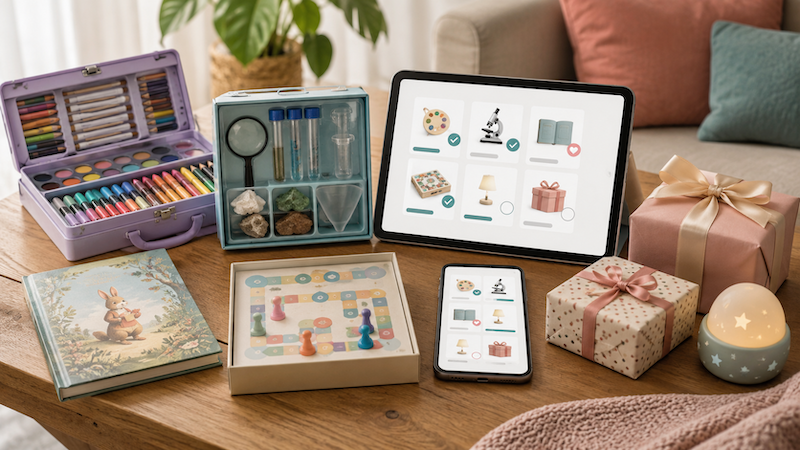
Birthday gifts are meant to be exciting, but opening two identical board games, three copies of the same book or several very similar toys can create an awkward situation for everyone.
Duplicate birthday gifts usually do not happen because guests chose poorly. More often, they happen because several people are working with the same limited information without knowing what the others have already chosen.
The good news is that avoiding duplicate presents does not require turning gift giving into a rigid shopping process.
A shared wish list, clear preferences, enough gift variety and a simple way for guests to coordinate can significantly reduce duplicate gifts while still leaving room for personal choices and surprises.
Here are practical ways to make that work.
Why do duplicate birthday gifts happen?
Understanding the problem makes it easier to prevent.
Imagine a 10-year-old who loves art.
Her grandparents know she likes drawing, an aunt knows she enjoys painting and two family friends remember seeing her with a coloring set.
Without any additional information, several guests may independently arrive at the same conclusion:
Art supplies would make a great gift.
They are all making a thoughtful choice. The problem is that they are making that choice independently.
Duplicate gifts commonly happen when:
- Several guests know about the same favorite hobby or character.
- Guests receive the same gift recommendation from the family.
- People do not know what the birthday person already owns.
- A wish list contains too few ideas.
- Several suggested products are very similar.
- Guests have no way to know whether someone else has already selected an item.
- Gift decisions happen through separate conversations, messages and family groups.
In other words:
Duplicate gifts are often a coordination problem, not a gift-choice problem.
The solution is not to control what everyone buys. It is to provide better information.
1. Create one shared source for gift ideas
One of the simplest ways to reduce duplicate presents is to stop managing gift recommendations through separate conversations.
Without a shared list, the process might look like this:
Grandma asks what the child wants.
A parent sends her three ideas.
An aunt asks two days later and receives some of the same recommendations.
Another guest writes through WhatsApp and is told that the child currently enjoys art and science.
By the time the birthday arrives, several people may have received overlapping suggestions without knowing it.
Instead, create one shared place where guests can find the latest information.
It might contain:
- Current interests.
- Favorite colors or styles.
- Clothing and shoe sizes.
- General gift categories.
- Specific gift ideas.
- Things the person already owns.
- Things they would prefer not to receive.
Everyone starts with the same information, and the organizer only needs to keep one list updated.
2. Include more than specific products
A shared birthday list does not need to tell everyone exactly what to purchase.
In fact, one of the best ways to preserve the personal side of gift giving is to combine specific ideas with broader preferences.
For example:
Specific idea
Watercolor painting set
General preference
She enjoys drawing, watercolor painting and creative projects. Washable, non-toxic art materials are preferred.
The specific suggestion gives guests an easy option.
The preference gives them freedom.
Someone might choose the watercolor set, while another guest could discover a sketchbook, art organizer or creative activity that fits the same interest.
A useful list can combine:
Specific gift ideas for guests who want certainty.
Gift categories for guests who prefer choosing something themselves.
Personal preferences for people who already have another gift in mind but want to know whether it would be appropriate.
This approach reduces duplicates without making the wish list feel restrictive.
3. Offer enough variety
A wishlist cannot solve duplicate gifts very effectively if it contains only three or four suggestions for a large number of guests.
Think about the number of people who may bring gifts and provide enough variety to give them realistic choices.
For a typical birthday, this might mean including ideas across categories such as:
- Books
- Art and crafts
- Games
- Science or educational activities
- Sports
- Clothing
- Room accessories
- Outdoor activities
- Practical items
- Experiences
You do not necessarily need one gift idea for every guest.
General preferences can expand the possibilities beyond the products listed.
For example:
Reading: Adventure, fantasy and mystery books for ages 9–12. She prefers stories without horror themes.
That single preference gives guests many possible choices without requiring the organizer to select every book personally.
If you need more ideas for building a balanced list, you can also review our guide on what to put on a birthday wish list for kids, including suggestions by age, interests and budget.
4. Avoid putting several nearly identical gifts on the list
Variety is not just about the number of items.
Imagine a birthday wishlist containing:
- Watercolor set A
- Watercolor set B
- Drawing kit A
- Drawing kit B
- Large art case
- Small art case
Technically, there are six gift ideas.
Practically, they are all competing for the same purpose.
Even if guests choose different products, the birthday child may end up receiving far more art supplies than they can use.
Instead, diversify the list:
- One art kit.
- One book.
- One science activity.
- One board game.
- One room accessory.
- One outdoor activity.
- One practical item.
- One experience.
The result is a more useful list and a more varied collection of birthday gifts.
5. Tell guests what the birthday person already owns
Knowing what someone likes is only half of the equation.
Guests also benefit from knowing what they already have.
Suppose a child loves board games.
Writing:
Loves board games.
provides useful information, but it can still lead someone to buy a game already sitting on the family's shelf.
A more helpful note could be:
She enjoys family board games and strategy games. She already owns UNO, Clue and Monopoly.
You do not need to publish an inventory of the child's belongings.
Focus on categories where duplicate purchases are reasonably likely.
For example:
She loves building sets but already has several space-themed sets.
or:
She enjoys stuffed animals but already has several large ones, so smaller creative gifts would be more useful right now.
A few well-chosen details can prevent unnecessary repetition.
6. Use gift reservations when possible
A reservation system adds another layer of coordination.
A gift reservation simply means that a guest indicates they are planning to choose a particular gift.
Other guests can then see that the idea is already being considered and select something different.
For example:
- Art Case — Reserved
- Science Kit — Available
- Friendship Bracelet Kit — Available
- Night Light — Reserved
- Adventure Book — Available
The reservation does not need to mean that the purchase has already happened.
It can simply communicate:
“Someone is planning to take care of this gift.”
This distinction is useful because plans can change.
If a guest later decides not to purchase the item, the idea should become available again whenever the platform or coordination method allows it.
7. Keep gift coordination separate from the surprise
Preventing duplicates should not mean telling the birthday person exactly what everyone is buying.
There are really two different needs:
Guests need coordination.
The birthday person should still be able to enjoy the surprise.
For children's birthdays, this can be relatively simple because a parent or guardian often creates and manages the gift information.
For older children, teens or adults who participate in creating their own wishlist, avoid sharing unnecessary details about who selected which item.
When using a wishlist platform, check how reservations or purchased-item statuses are displayed before the list is shared.
The objective is to coordinate the guests without turning the birthday into a preview of everything waiting inside the gift boxes.
8. Give guests options for different budgets
Another common source of duplicate gifts is a list with plenty of ideas but only a few that fit a guest's budget.
Imagine a list containing eight products but six of them cost more than $50.
Several guests looking for something around $15–$25 may naturally choose between the same two affordable options.
A more balanced list could offer:
Under $15
- Book
- Small puzzle
- Coloring supplies
- Craft accessories
$15–$30
- Board game
- Art kit
- Building set
- Room accessory
$30–$50
- Science kit
- Larger craft set
- Sports equipment
Higher-value ideas
- Special experience
- Larger hobby item
- Group gift
The exact amounts will vary between families and locations.
The principle matters more than the ranges:
Give guests meaningful choices at different price levels.
9. Remember that not every gift needs to be a product
Physical products are not the only options for a birthday.
Adding experiences to the list can create more variety and reduce the possibility of duplicate objects.
Depending on the child's interests and location, ideas might include:
- Movie tickets
- Zoo or aquarium admission
- Museum tickets
- Art classes
- Cooking workshops
- Sports lessons
- Trampoline or activity parks
- Theater tickets
- A family experience
- A contribution toward a larger activity
Experiences can be particularly useful for children who already have plenty of toys or whose families prefer fewer physical belongings.
10. Let guests choose outside the list
A birthday wish list should provide guidance, not eliminate creativity.
Some guests may know the birthday person very well and already have an idea they believe will be perfect.
That is completely fine.
The preferences included in the list can still help them confirm their decision.
For example, they might check:
- Favorite colors.
- Current hobbies.
- Clothing sizes.
- Book interests.
- Things already owned.
- Things to avoid.
The goal should never be:
“Only buy something from this list.”
A better principle is:
“Here is useful information if you need help choosing.”
That distinction keeps gift giving personal.
11. Be careful when coordinating through group chats
Family WhatsApp or messaging groups can help prevent duplicate presents, but they also have limitations.
Someone might write:
I'm buying the science kit.
That works when everyone is in the same conversation.
But another guest may not belong to the group, someone may miss the message, or a new guest may join the planning later.
Group chats can also spoil surprises when the birthday person is part of them.
If you coordinate manually, consider maintaining one simple list outside the conversation.
For example:
| Gift idea | Status |
|---|---|
| Science kit | Taken |
| Art set | Available |
| Board game | Available |
| Night light | Taken |
| Adventure book | Available |
Only share this information with the people who actually need it.
For a small family celebration, this simple approach may be enough.
For larger events, a shared digital wishlist can make coordination easier.
12. What if two people already bought the same gift?
Even with careful planning, duplicate gifts can still happen.
The most important thing is to remember that both guests probably made the same choice for a good reason: they believed the person would enjoy it.
Treat the situation with appreciation first.
If an exchange is possible, one of the duplicate gifts could be replaced with something else the recipient needs or wants.
Other possibilities include:
- Keeping one as a replacement.
- Using the second item in another location.
- Exchanging it for another product.
- Donating it.
- Giving it to someone else later when appropriate.
For books, games and toys, check whether different editions or versions make keeping both worthwhile before deciding.
Most importantly, avoid making the guest feel that their present was a mistake.
The problem was duplication, not the thought behind the gift.
13. Share the wishlist without making gifts feel mandatory
How you introduce the list matters just as much as what is inside it.
Avoid messages such as:
Here is the list of gifts you can buy.
Instead, frame it as optional help.
For example:
We created a small birthday wishlist with some of Sofia's current interests and gift ideas in case it's helpful. Your presence is what matters most to us.
Or:
For anyone who has asked for gift ideas, we put together a short list of things she currently enjoys. Feel free to use it simply as inspiration.
This keeps the focus on the celebration rather than the gifts.
A practical example: Sofía's 10th birthday
Let's imagine Sofía is turning 10.
Her family shares the following preferences:
She enjoys
- Drawing and watercolor painting.
- Crafts.
- Adventure and fantasy books.
- Puzzles.
- Board games.
- Simple science activities.
Favorite colors
Purple, pink, turquoise and pastel tones.
Gift ideas
Art Case
A complete set for drawing and coloring.
Science Kit
A hands-on activity for exploring simple experiments.
Friendship Bracelet Kit
A creative project she can make and share with friends.
Night Light
A soft decorative light for her room.
Adventure Book
A story suitable for readers ages 9–12.
Family Board Game
Something she can enjoy with friends and relatives.
Now imagine that two guests have already selected gifts:
Art Case — Reserved
Science Kit — Available
Friendship Bracelet Kit — Available
Night Light — Reserved
Adventure Book — Available
Family Board Game — Available
A guest originally thinking about buying the art case can immediately see that another person is already considering it.
They do not necessarily need to call Sofía's parents and ask for another recommendation.
They can choose one of the available ideas or use her preferences to find something completely different.
That is the practical benefit of coordination.
14. A simple system for avoiding duplicate birthday gifts
If you want an easy process, use these five steps:
1. Create one shared wishlist
Keep preferences and ideas in one place instead of sending different recommendations to different guests.
2. Add variety
Include several categories, price ranges and general preferences.
3. Mention important things already owned
You do not need a complete inventory—only likely duplicates.
4. Allow gift selections to be coordinated
Use reservations or another simple system to indicate when an idea is already being considered.
5. Keep the list optional
Encourage guests to use it as guidance, not as an obligation.
This creates enough structure to prevent many duplicate gifts without taking away the freedom and surprise that make gift giving special.
Duplicate gift prevention checklist
Before sharing a birthday wishlist, check that you have:
☐ Created one shared source for gift information.
☐ Included several different types of gifts.
☐ Added options for different budgets.
☐ Avoided too many similar products.
☐ Included useful preferences.
☐ Mentioned important items already owned.
☐ Added a short “please avoid” section when useful.
☐ Provided enough options for the expected number of guests.
☐ Included experiences or non-product ideas when appropriate.
☐ Created a way to indicate when a gift idea has been selected.
☐ Kept unnecessary gift details away from the birthday person.
☐ Explained that the wishlist is optional.
Frequently Asked Questions
How can I prevent duplicate birthday gifts?
Use one shared wishlist containing several gift ideas, personal preferences and information about items already owned. When possible, allow guests to reserve or mark an idea they plan to purchase so other guests can choose something different.
What does reserving a gift mean?
A gift reservation usually indicates that someone intends to purchase or give a particular item. It helps other guests avoid selecting the same idea.
Does reserving a gift mean it has already been purchased?
Not necessarily. A reservation can simply mean that someone plans to choose that gift. If plans change, the reservation may need to be removed so the idea becomes available again.
How many gift ideas should I include?
There is no required number. The list should provide enough variety for the expected number of guests without becoming overwhelming. Combining specific gifts with general preferences can create many more possibilities without adding dozens of products.
Should the birthday person know which gifts have been selected?
Not necessarily. When preserving the surprise matters, coordinate gift selections among the organizer and guests without revealing unnecessary information to the birthday person.
What if someone wants to buy something that isn't on the wishlist?
That is perfectly fine. A good wishlist provides guidance rather than rules. Guests can use interests, colors, sizes and other preferences to choose something different.
What should I do if two guests buy the same gift?
Thank both guests for their thoughtful choice first. If practical, one gift can later be exchanged, donated, saved or used elsewhere. Avoid making either guest feel uncomfortable about the duplication.
Is it rude to send guests a birthday wishlist?
A wishlist can be helpful when presented as optional guidance rather than an expectation. A friendly message can make it clear that the guest's presence is more important than bringing a particular gift.
Better coordination, more thoughtful surprises
Avoiding duplicate birthday gifts does not require controlling what everyone buys.
The most effective approach is much simpler:
Give guests better information and an easy way to coordinate.
A well-organized wishlist can communicate interests, preferences, useful details and different gift ideas while still allowing friends and family to make their own choices.
And when guests can see that an idea is already being considered, they can confidently explore another option without spoiling the surprise.
Make birthday gift planning easier with LinGift
LinGift gives you one place to organize a celebration's preferences and gift ideas, so guests have useful information when deciding what to give.
Create your event, add the person's interests and gift suggestions, and share everything through a simple link or QR code. Guests can use the available ideas and reservations to coordinate their choices and help reduce duplicate presents.
The goal isn't to tell people what to buy.
It's to make choosing a thoughtful gift easier.
Create your free LinGift account and start organizing your next celebration.